

After the Flood
Contemplating legacies of generosity and care

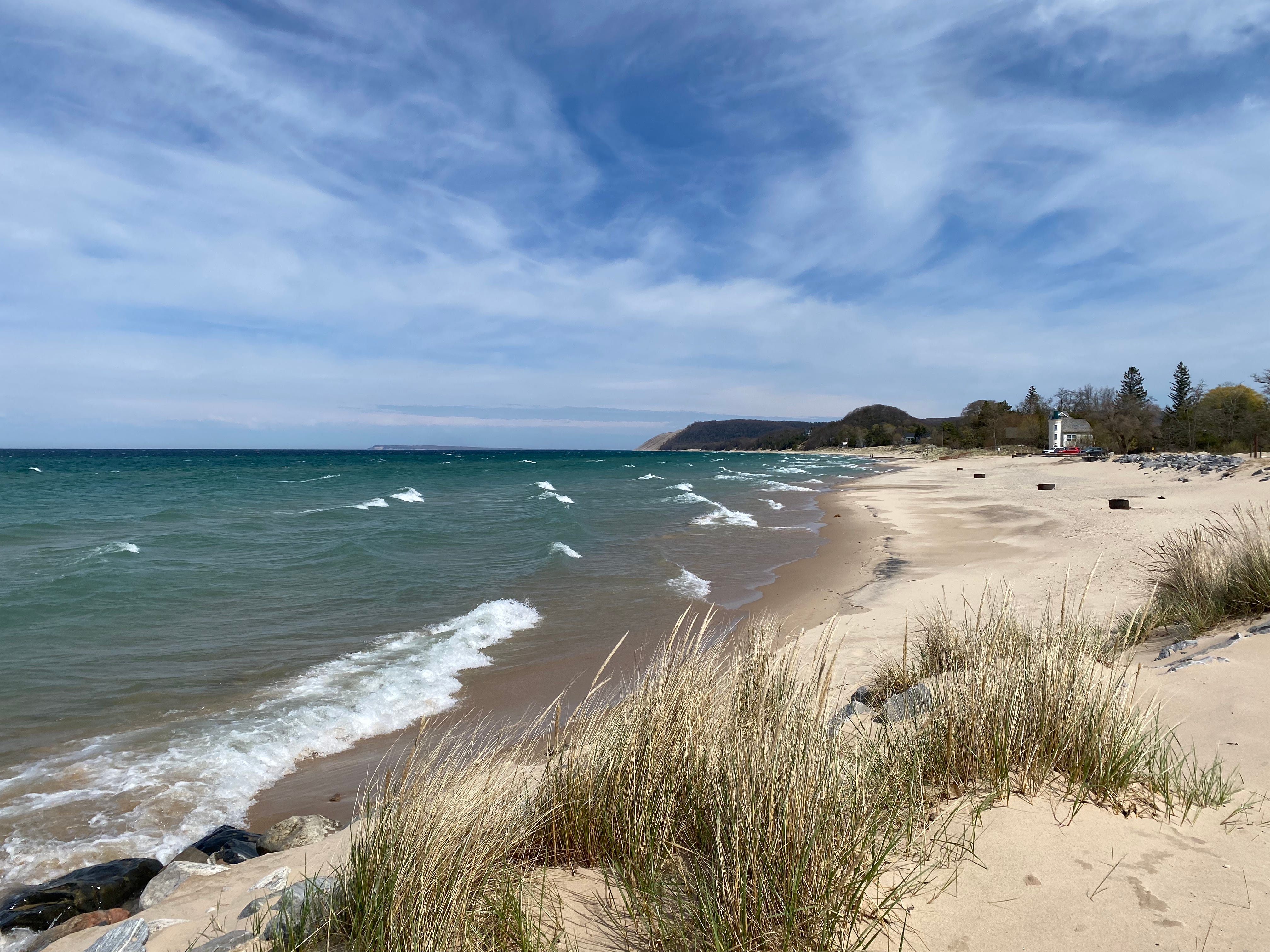
On Sunday mornings, I meet the Empire Swim Club at the village beach. This week, we wade into the cold water–there is no thermometer, but it feels to be in the mid 40s–as a light rain falls on our shoulders. Waves smash against our bodies with a steady consistency as we walk into them, turning in unison to catch their break with our shoulders instead of our straight on.
My friend Brianne once compared us to birds as we flocked into the water, and I see it as we walk out into the water. A flock of docks moving, moving, moving; letting our bodies carry us to where the water touches our shoulders so that we won’t have to attempt to crouch down. With the waves, there is little room for hesitation. They crest and splash and insist that we go all in. Karen out front calls “wave!” to the rest of us as we move together, making sure no one is caught off guard. We keep an eye on each other, and I carry this responsibility with extra care as the youngest, making sure no one is smashed underwater by the waves.
On the days when the waves are the biggest, the sense of community feels the strongest. Something about adversity draws us closer, helps us remember how much we need each other.
In April, northern Michigan experienced flooding unlike anything I have witnessed in my decade of living here. A combination of excessive snow melt and heavy rains, coupled with still-frozen soil feet underground, caused incredible damage throughout the region as spring emerged. The Boardman River in Traverse City crested feet above its record height, washing out bridges and flooding homes. In our little village at lake level, so many neighbors had flooding in their basements. For weeks after, my walks were set to the tune of sump pumps turning on and off, water gushing out of long-established pipes–as well as wonky, makeshift pumps–onto the sidewalk as I walked by.
As the whole state fell under a flood warning, a neighbor put out a morning call to our swim group that her apartment was underwater. Members of the group showed up in shifts throughout the day, offering what they could: water pumps, sand bags, wet vacs, bins for moving, muscle for lifting. We banded together in an attempt to mitigate the water in her garden level apartment, and when it was determined that the water wasn’t receding, we packed everything up and moved it out.
I marvel at the speed with which people responded. An ask for assistance met with care within an hour, the lawn full of boxes, three wet vacs in the apartment. This group, made up almost entirely of women–who I have seen drop everything to cold swim in Lake Michigan at a moment’s notice–showed up just as quickly to carry cold water out of a house, stacking sand bags at the door. As on wavy days, our awareness of how much we need each other heightened in the face of danger.

When my parents were newly married, they bought the old farmhouse I would eventually grow up in. The house was nearly one hundred years old when they bought it in 1983 and they spent years turning the abandoned house into a beautiful home. They fully gutted and rehabilitated the house with the help of their community, friends and neighbors who had the experience they needed, who dedicated days and weeks to ripping out and replacing windows, re-building the roof, wiring and plumbing the whole thing.
My parents have referenced this assistance many times since my years of home ownership began, insisting that the help they offer my husband and I is simply passing down a legacy they were handed from men whose names are held with a certain amount of reverence in our family: Clyde, Joe, Bernie, my grandfather, Bob. My dad, who I swear can do anything, first learned his skills from the elders in the community who showed up and did the work beside him. This winter, when my dad updated the old plumbing in our house and installed the washer and dryer in the basement, he was carrying forth a legacy he had been shown in his early days of home ownership, sharing skills handed down from those who are no longer alive, who helped create the home he raised us in.
Even the yard at my parents’ farmhouse took shape from the generosity of others. Clyde and Marleah gave them a row of pine trees planted along the road that would tower over my brothers and I by the time we were teenagers. In a story I only recently heard, Joe’s mom Edith offered a maple sapling that would grow to be one of the biggest and most loved trees in my childhood yard. My dad shared the story of this tree at Edith’s funeral two years ago, an example of her generosity and the redemptive spirit she extended to everyone around her. Edith saw a little twig of a tree, the maple sapling, growing in her garden, and rather than discarding it, called my parents and asked if they wanted it at their new house. My parents planted it where they had recently removed a decaying stump, the tree growing in the legacy of another.
When I think about what I want to hand down to my children, it is this legacy of generosity and care, a legacy that says there is more than enough to go around. The lesson of this, one that I am optimistic enough to believe most humans still carry, seems innate in the natural around us, and perhaps our sense of community is one learned from the community of the trees and landscapes where we dwell.

My daughter and I walked to the chocolate shop yesterday afternoon, and as we drank our hot chocolates, the women behind the counter shared knowledge of wild spring flowers as they packaged truffles. “Dutchmen’s breeches, not to be confused with squirrel corn; they look alike. The jack in the pulpit will be in bloom soon.” They paused their packaging to huddle around the iPad, to help identify other wild ephemerals, as they discussed the early arrival of spring. Sharing knowledge and acknowledging the beauty of the woods, the gifts of the natural world.
This time of year, the woods are full of gifts, a revolving door of generosity ready for the visitor who knows what to look for. I know some, see ramps out the window on every drive through the county, pant after them as I climb Wilco Hill on my bike in the dusk. I scan the hillsides from the road hoping to catch signs of a morel, but of course a gift that special will not be so easily found. Instead, I ask my neighbors if they’ve found any yet, try to beg myself along on their backwoods hunts. I know that no one will give up their spots with a map or simple directions, but if I ask enough, someone will take me there.
Nature, the ultimate gift-giver, imparting on us all a legacy of care we would not exist without. The allium on the hillsides, the fungi hiding in last fall’s leaves under the poplars, giving way to wild strawberry, then later in the summer blueberry and blackberry. Robin Wall Kimmerer’s book “The Serviceberry” comes to mind, and the reciprocity we are invited into because of nature’s abundance.
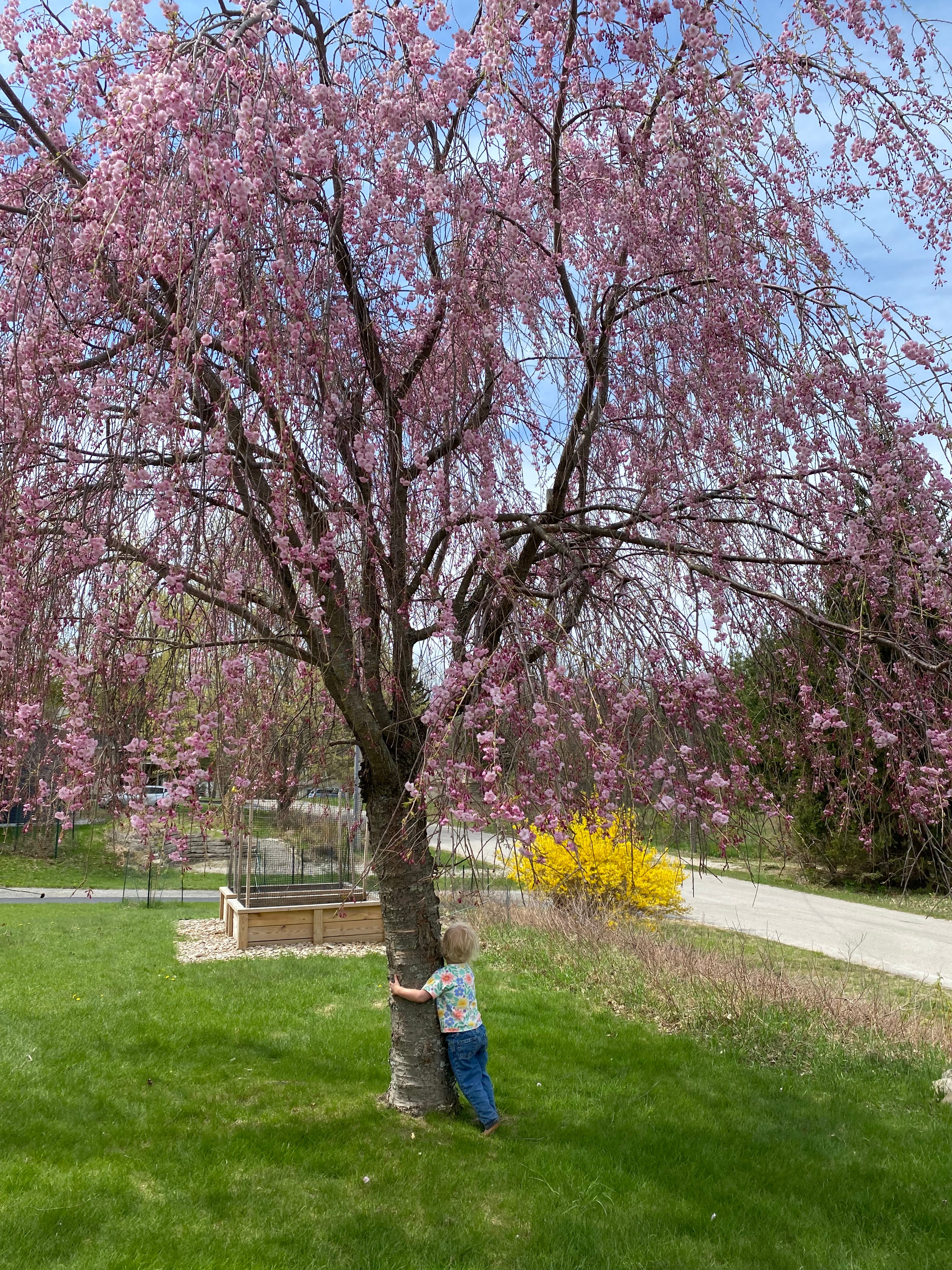
On our walk home from the chocolate shop, on the last uphill leg of what had turned into a nearly-three mile-walk, my three-year old’s little legs got tired, and she begged to be carried. In my hands already were library books, her bike, her helmet, and her muddy crocs which she refused to put on until they were cleaned off. I took stock of the situation, offered to leave her bike and helmet at a neighbor’s to retrieve later, but then, looked down the street and saw our next door neighbor Dave clearing leaves from another neighbor’s yard, loading them into his truck. She walked the last hundred feet up to him, and then she quietly asked if we could put her bike in his truck to bring home later. “Of course,” he said, and I unloaded the bike, along with our library books, to be delivered later. As we walked away later, I whispered in her ear, “There are always helpers. We just have to remember to ask for help when we need it.”

Dave dismisses his constant kindness as “just being neighborly,” yet the speed at which he offers his truck or clean up a yard or volunteers to watch a dog or agrees to spend time with my toddler so I can take a meeting sends ripples through our community. Suddenly, we all want to be a little more neighborly, knowing what it feels like to have someone we can consistently count on next door.
I realize more and more, building community ultimately comes down to these little moments, and is as reliant on someone asking for help as it is on someone being willing to offer it. Kindness extends far beyond the people directly involved. A sapling saved from the compost heap will one day shade children who were not yet born when it was planted.
Post Recommendations
You may also enjoy these stories:


If you enjoy reading Lake Letters,
please consider sharing with a friend.
Whatever your week looks like, whether filled with ease or hardship, may you feel connected to generosity, either from your neighbor or the gifts of nature.
Cheers,
Mae Stier
