

The Power
A neighbor stands guard over his trees, but they are destroyed in his absence. What is lost in the name of progress?

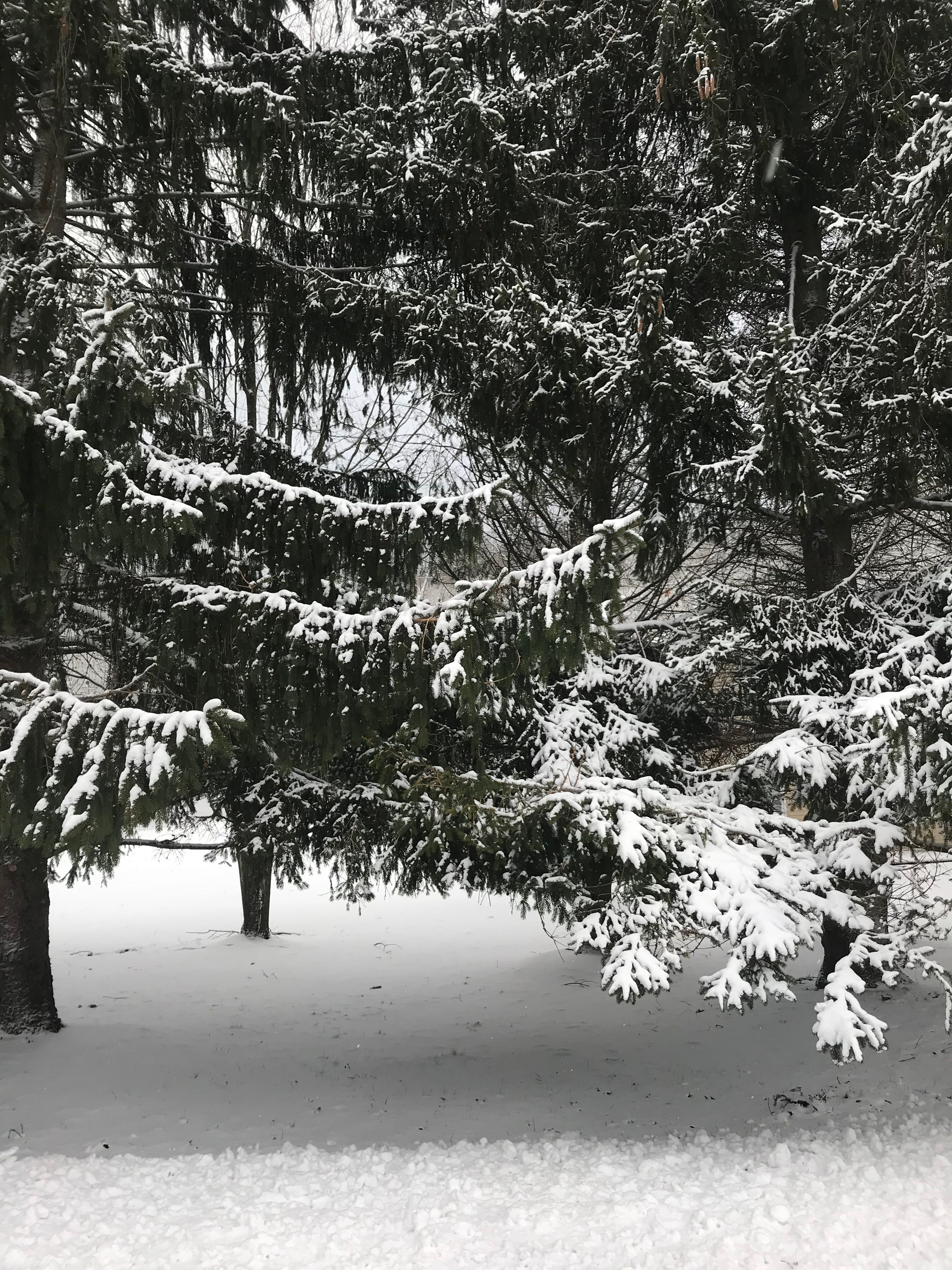
We met while he was standing guard in the road, keeping an eye on the folks contracted to trim back his trees for the electrical company. The tree service trucks lined the road and the man, who introduced himself as Joe, stood watch below, keeping an eye on each move. “My wife and I planted these trees forty years ago,” he told me, “Norway Spruce.” The trees towered over us in a gorgeous row, their shaggy boughs hanging low and long, brushing the ground. His house, an old farmhouse on a sprawling lot just around the corner from my own, barely visible through the greenery.
I stood next to him for a few minutes, his eyes hardly moving from their watch over the work of the trimmers. In our brief conversation, I learned that Joe lives in Chicago, and only makes it north occasionally these days. He didn’t say if he came specifically to keep an eye on the tree-trimmers, but I guessed that may be the case. He didn’t mention if his wife was still alive, but his love for her was evident in the watchful eye he dedicated to the trees he planted with her decades ago.
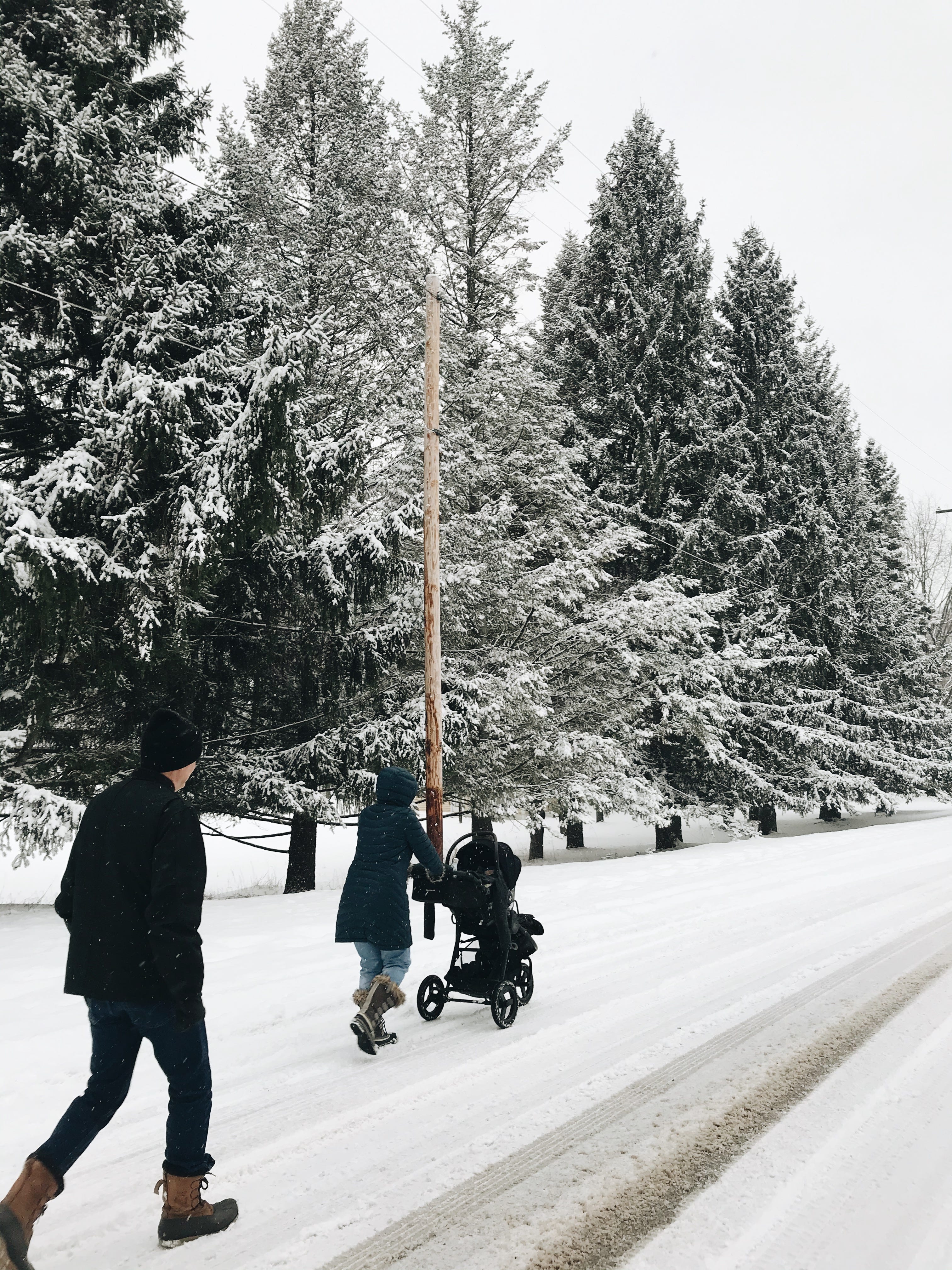
At the end of January this year, the tree-trimmers took up residence in our village for weeks, slowly cutting back tree limbs with any proximity to the power lines. It has been a particularly snowy winter, and the village lost power both weekends around Christmas. I guess the electrical company decided it was time to reduce the risk of downed trees taking the power lines with them. Some neighbors have heard that the power company is finally running lines underground, and others have said we’ll be connected to multiple transformers now. The chance of power cut-off potentially less likely.
My daily walk to Lake Michigan takes me right past Joe’s house and his row of Norway Spruce. I always notice it, sometimes call it my dream house (to my husband’s dismay; he is tired of living in an old house and this one is even older), with the way its yard spreads all the way to Storm Hill. Lake Michigan is just up and over the ridge; I dream about moving down the street and cutting through the backwoods on adventurous evening bushwhacks to the lake.
While the tree service worked through the grid of village streets this winter, I waved and smiled daily at them on my walks. Some days it was just me, some days I pushed our bike trailer as an all-weather stroller with one or both of my children, one day I walked with my growing daughter on my back because she insisted on being held. Every day, we smiled and waved, and I wondered at their slow movement through our streets. How many trees did they plan to cut back? One day, I turned the corner onto Lake Street and audibly gasped. The majestic row of Norway Spruce had been completely desecrated.
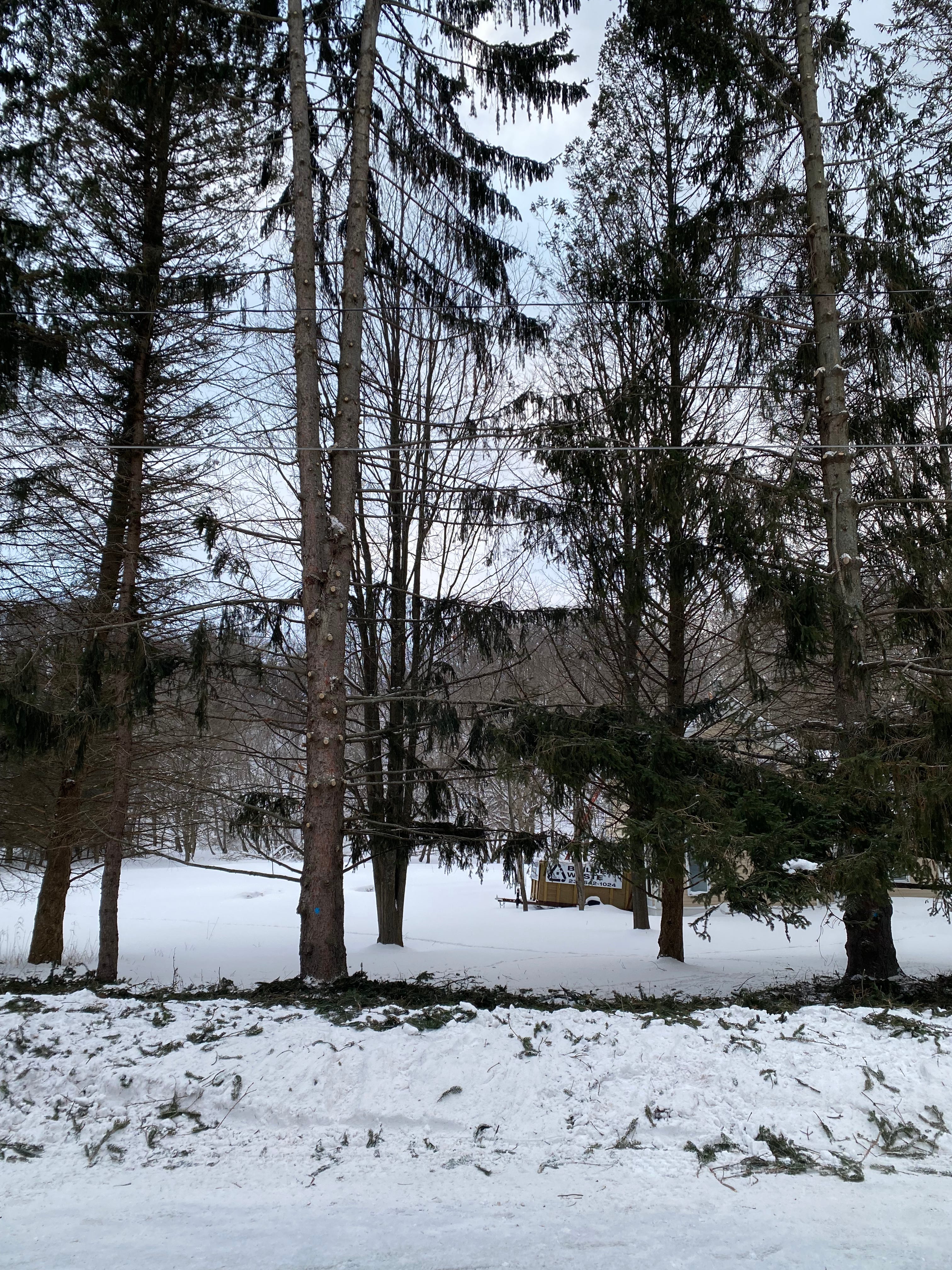
It felt violent and aggressive, the long limbs of these huge trees hacked and left in piles on the snow. Was anyone warned? Who approved this? I moved slowly past the carnage that first day with my mouth agape. Ahead, I saw another neighbor, Jim, walking home and looking as dismayed as I felt. “This seems excessive,” I said, waving to the detritus on the ground, and he agreed. We stood staring at the trees in silence for a moment, then said good-bye and walked our separate ways.
The giant, cascading boughs that once draped and nearly hid the house from view, that lined the street so elegantly, were now scattered atop the snow, the trunks naked. In the weeks that followed, I walked by almost daily, watching the chopped limbs get covered with snow, then reappear in a melt. Last weekend, three feet of snow dumped on them and for now, the limbs are obscured by snow again. The evidence almost hidden until you look up, see the bare bodies stretching exposed to the sky.
I wonder if Joe knows. Was he warned by the electrical company that they would once again be trimming his trees? If he was, what kept him from standing watch this time? I hate to think about his reaction the first time he drives down Lake Street this summer, the disregard for his many years of thoughtful care for the trees he planted with his wife.
It has been a few years since my conversation about the trees with Joe, yet it feels more tender now than it did then. How fast a sapling grows taller than the house, than the power lines. Could he remember the smell of the dirt as they dug holes to sink the roots into? What yearly growth was measured alongside those trees? “Look, the tree is almost as tall as you,” he may have said to a child, and then a few years later, “the tree is almost as tall as the house!”
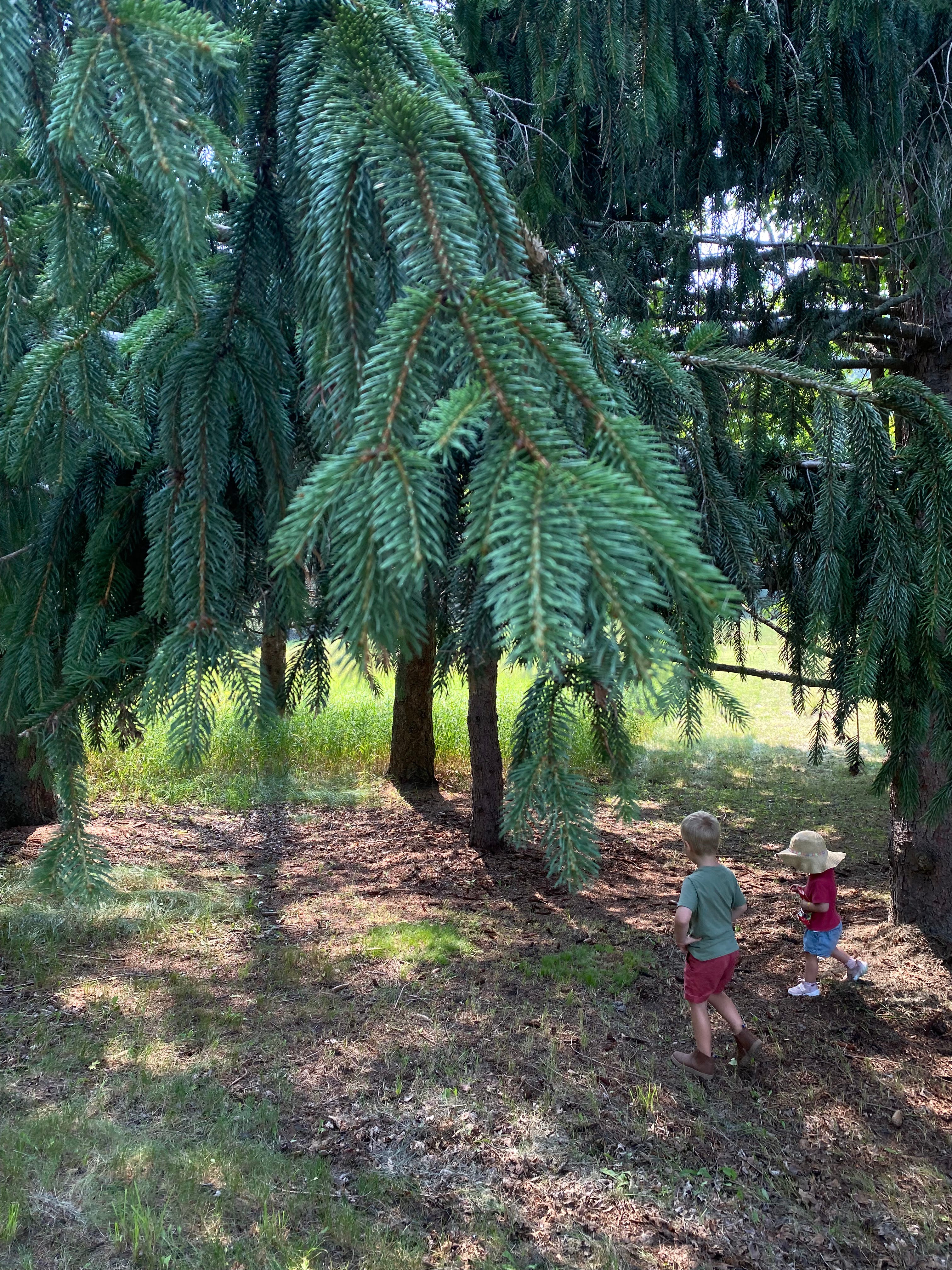
Norway Spruce are some of the fastest growing spruce trees, adding nearly three feet of growth to their height each year. The height of my now-three-year-old added each season; these trees are known for their strength and large spreading root systems; their ability to offer a sturdy windbreak.
It feels like a stark shift, our relationship with the natural world. In forty years’ time, trees gone from offering support against the wind to becoming a threat to our connectivity. I consider everything we cut back in the name of technological advancement. It frustrates and surprises me, and yet, I acknowledge my dependence on it.
Earlier this week as we braced ourselves through a winter storm unlike anything I can remember in my lifetime, my husband and I stood in the kitchen watching another neighbor’s eighty-year-old maple tree sway in the 50 mile-per-hour wind gusts. We were under a blizzard warning and had hardly left the house in days. Over the course of four days, we got three feet of heavy snow, with howling winds that blew everything into enormous drifts. The whole region shut down, and standing in the kitchen watching the neighbor’s tree bend and sway filled me with awe. Look at how resilient these old trees are, moving and yet somehow, not breaking. Of course, that was the story for the tree that day, who knows what is to come next.
On a walk to the lake the day after the winds died down, I passed my neighbor Jim sitting on his porch. “That was intense,” he said of the storm we had just weathered, “but at least the power didn’t go out.”
I agreed, then said, “I am grateful.”

Post Recommendations
You may also enjoy these stories:


Updates to posting rhythms
I am working towards building consistency and an increase in my publishing calendar. For now, this is what you can expect from Lake Letters:
Every week, a free essay within the realm of the following topics – Life near Lake Michigan, Making Room for Creativity, or Reflections on Interdependence.
Once monthly poem for paid subscribers – inspired by Lake Michigan and life in northern Michigan
I am working on a new series about finding space for creative projects within constraints (for me, the biggest constraint is motherhood), and am excited to share what I am learning in real-time as I push myself to be expansive! More to come.

Wishing you the courage to stand guard and watch over the trees, and neighbors to notice along with you.
Cheers,
Mae Stier
Beautiful writing Mae. My heart aches for these trees and the people who loved them. Certainly an essay about both life near the lake and inter connectedness ❤️
You can feel all the emotions when reading this, and my heart goes out to the trees and all those who admire and awe over them. "My wife and I planted these trees 40 years ago...." especially out to Joe and his wife.